
How Can Mobile Automation Help Reduce Fuel and Energy Costs?
Fuel and energy costs are putting growing pressure on manufacturers and warehouses. With prices fluctuating and operating expenses climbing, companies are looking for ways to use less energy, reduce their exposure to fuel costs and make expenses more predictable.
The pressure is real. According to the U.S. Energy Information Administration (EIA), U.S. retail diesel prices averaged $6.29 per gallon in September 2026, following a sharp increase driven by higher crude oil prices and refining costs. The EIA also forecasts that U.S. wholesale electricity prices will average 11% higher in 2026 than in 2025.
For facilities that depend on forklifts and other material handling equipment, these costs can add up across every shift.
That raises and important question: Can mobile automation help reduce fuel and energy costs?
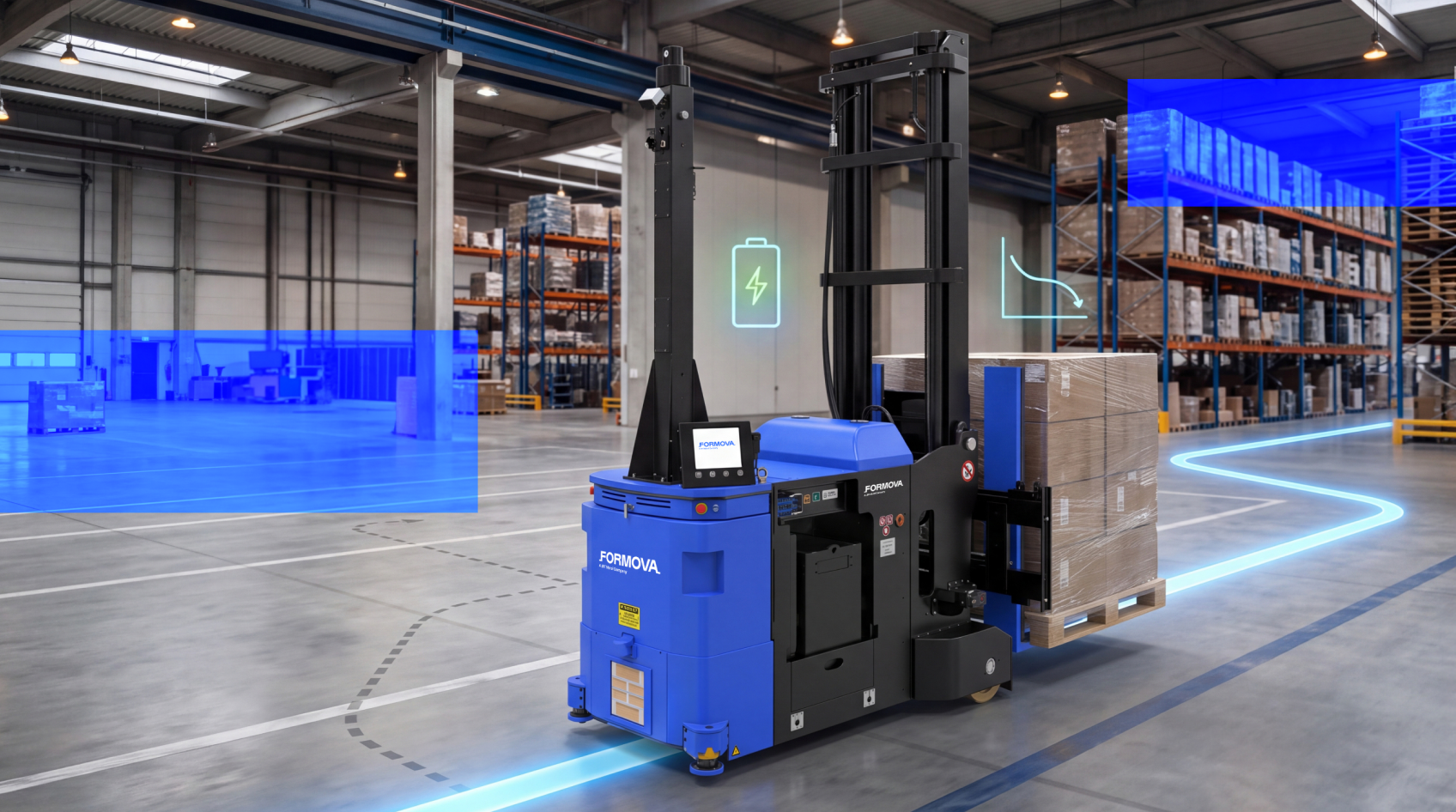
Electric automated guided vehicles (AGVs) offer an opportunity to rethink how materials move throughout a facility. By automating appropriate transportation tasks, reducing reliance on fuel-powered equipment and using intelligent software to manage movement and charging, companies can take steps toward greater energy efficiency and more predictable operating costs.
Reduce Reliance on Fuel-Powered Material Handling
In many manufacturing and warehouse environments, forklifts make the same trips repeatedly throughout the day. Pallets move from production to storage, components travel to assembly lines, and finished goods move to staging.
When Those Predictable Movements Are Handled by Propane- or Diesel-powered Forklifts, Every Trip Contributes to Fuel Consumption.
Electric AGVs can take on many of these repetitive transportation tasks without consuming diesel or propane during operation. Replacing appropriate fuel-powered forklift trips with electric automation can therefore help reduce a facility's fuel requirements and its exposure to fluctuating fuel prices.
For manufacturers and warehouses, the opportunity is to evaluate which routine material moves could be handled more efficiently through electric automation. By shifting appropriate tasks away from fuel-powered equipment, companies can begin reducing fuel consumption while maintaining reliable material flow.
Make Every Move More Energy Efficient
Reducing fuel consumption is one part of the equation. The next opportunity is managing how efficiently electric AGVs use energy.
Every material move requires energy. The vehicle must travel to the pickup location, transport the load, and reach its next assignment. Travel distance, route selection, load weight, and the frequency of stop, and starts can all influence electricity consumption.
That means two vehicles completing the same basic job may not necessarily use energy in the same way. A route with unnecessary travel, frequent stops, or congestion may consume more energy than one that is planned and coordinated more effectively.
For companies looking to reduce energy costs with automation, smarter movement can be an important place to start.
Make Routing About More Than Distance
The shortest route isn’t necessarily the most energy-efficient route. Turns, stops, congestion, and changes in speed can all affect how much energy a vehicle uses to complete a task.
In a busy manufacturing or warehouse environment, routing also needs to account for what is happening around the vehicle. Is another vehicle occupying the preferred path? Is congestion creating unnecessary stops? Can tasks be assigned in a way that reduces unproductive travel?
These decisions can affect both energy consumption and overall system performance.
FORMOVA’s mōt.OS® motion operating system helps optimize routing based on conditions across the automation environment, supporting more-efficient material movement while helping operations make better use of their automated vehicles.
Think Smarter About Charging
Electric AGVs eliminate the need for onboard combustion fuel, but they still consume electricity. How that electricity is managed matters, particularly as energy prices rise.
Charging decisions can influence energy costs, vehicle availability, and overall system performance. When should a vehicle charge? For how long? How can charging be coordinated with operational demand?
An effective charging strategy considers these questions alongside the work vehicles need to perform. By coordinating charging with routing and task requirements, companies can better manage energy use while keeping vehicles available when they are needed.
mōt.OS® helps optimize charging alongside vehicle routing and task requirements, allowing companies to manage energy needs in the context of their broader operations.
Reduce Unnecessary Movement and Operating Costs
One of the simplest ways to think about energy savings is to ask whether every material move needs to happen in the first place.
Empty travel, unnecessary waiting, repeated trips, and poorly coordinated pickups and deliveries all consume time and energy without adding value to the operation.
Better visibility into material flow can help companies identify where movement can be coordinated more effectively. And as the automation system grows, intelligent task assignment and routing can help make better use of the vehicles already operating in the facility.
Reducing unnecessary movement can help limit energy consumption while supporting more-consistent material flow. Over time, those improvements can contribute to lower operating expenses and more-efficient use of automation resources.
Build Greater Predictability Into Operating Costs
Fuel prices can change significantly over time, making the cost of fuel-powered material handling difficult to forecast. Electric AGVs introduce a different operating-cost structure, with electricity consumption influenced by vehicle activity, charging requirements, and local utility rates.
While electricity prices can also fluctuate, automated systems give companies opportunities to better understand and manage how energy is used. Predictable routes, repeatable tasks, and intelligent charging can support more-informed planning around energy requirements.
The goal is greater control over the factors that influence operating costs.
By combining electric mobile automation with software that helps optimize routing, charging, and material flow, manufacturers and warehouses can work toward reducing fuel consumption, managing energy use, and improving cost predictability.
That’s the thinking behind FORMOVA’s Total Automation Intelligence approach: combining mobile automation technology, intelligent software, integration expertise, and lifecycle support to help companies operate more efficiently today while adapting to tomorrow’s demands.